Laser Alignment & Motor Conditioning


Proper shaft alignment of directly coupled machines has proven to be one of the greatest money savers for machinery-intensive industries over the last 25 years. When poorly done, usually for lack of time, accurate measurement tools, or because of improper procedures, a bad alignment on a single motor-pump unit can cost a plant thousands of dollars in unnecessary downtime, failed seals, premature bearing wear, increased vibration, reduced efficiency and higher power consumption. Often it is a hidden ailment, only noticed with surprise when a coupling, bearing or seal fails unexpectedly.
When two centerlines of rotation are not aligned correctly and are forced to spin together, the machines’ shafts undergo a destructive stress reversal of double the magnitude of the misalignment at twice the speed of rotation. At 1,800 rpm this will happen 5,184,000 times a day. The flexing of the shafts and of the coupling’s flexible elements produce an excitation force that travels through the shafts and into the bearings, rotors and seals. This vibration can destroy them in far less time than they are designed to last. It costs the machine power to do this—the improvement of a precision alignment over a straightedge rough alignment on a larger compressor train in continuous service could cut power consumption enough to shave thousands of Rands off the electric bill per year.
EQUIPMENT REQUIRING ALIGNMENT
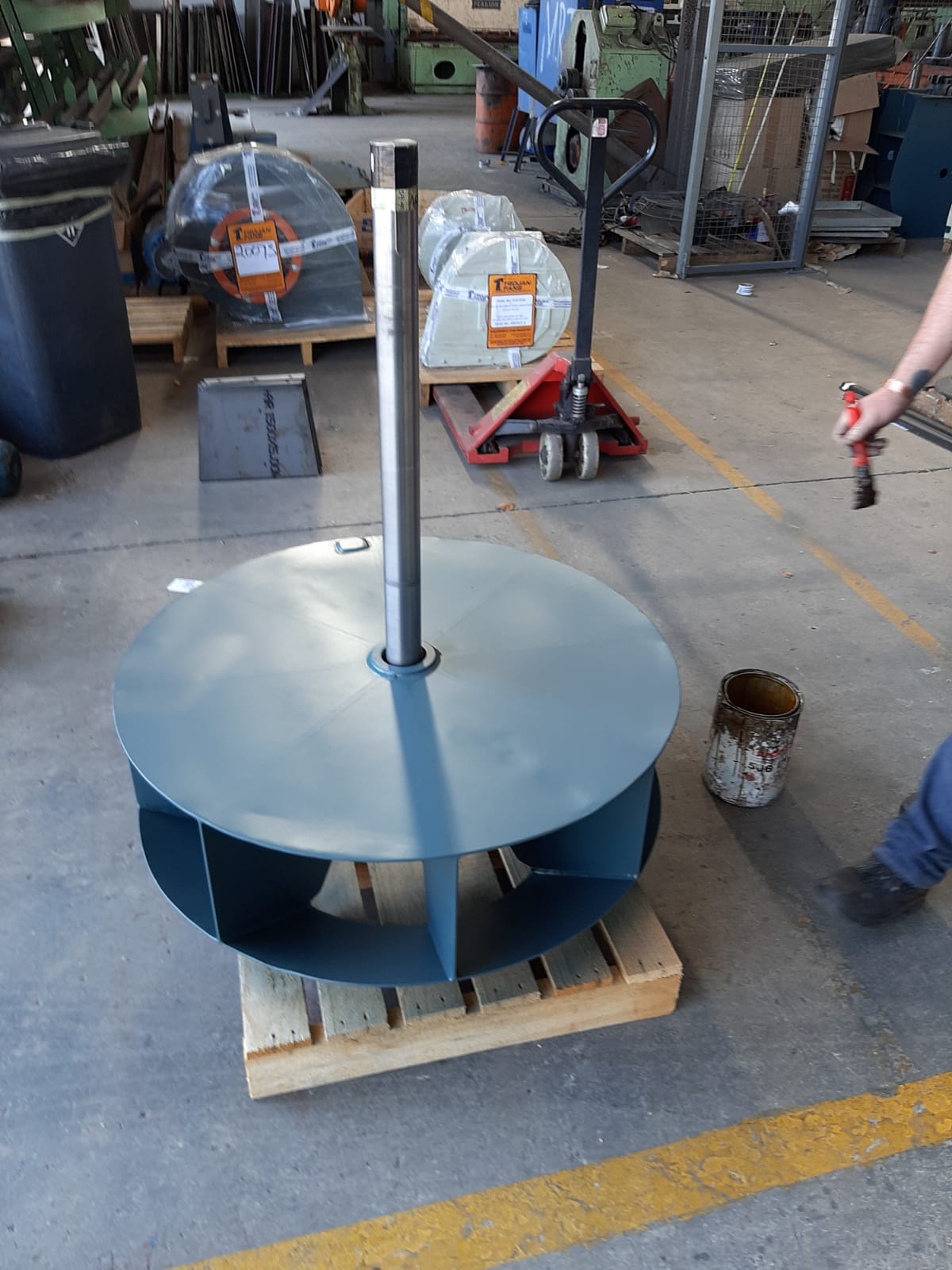
Any rotating equipment with 2 or more components connected by couplings. This includes, but is not limited to:
CIRCULATING PUMPS
AIR AND REFRIGERATION COMPRESSORS
AIR HANDLERS
MANUFACTURING MACHINES
GENERATORS
COOLING TOWER SHAFTS
ANY TIME THE EQUIPMENT IS REPAIRED OR A COMPONENT IS REPLACED, THE ALIGNMENT SHOULD BE CHECKED.
PROCEDURE
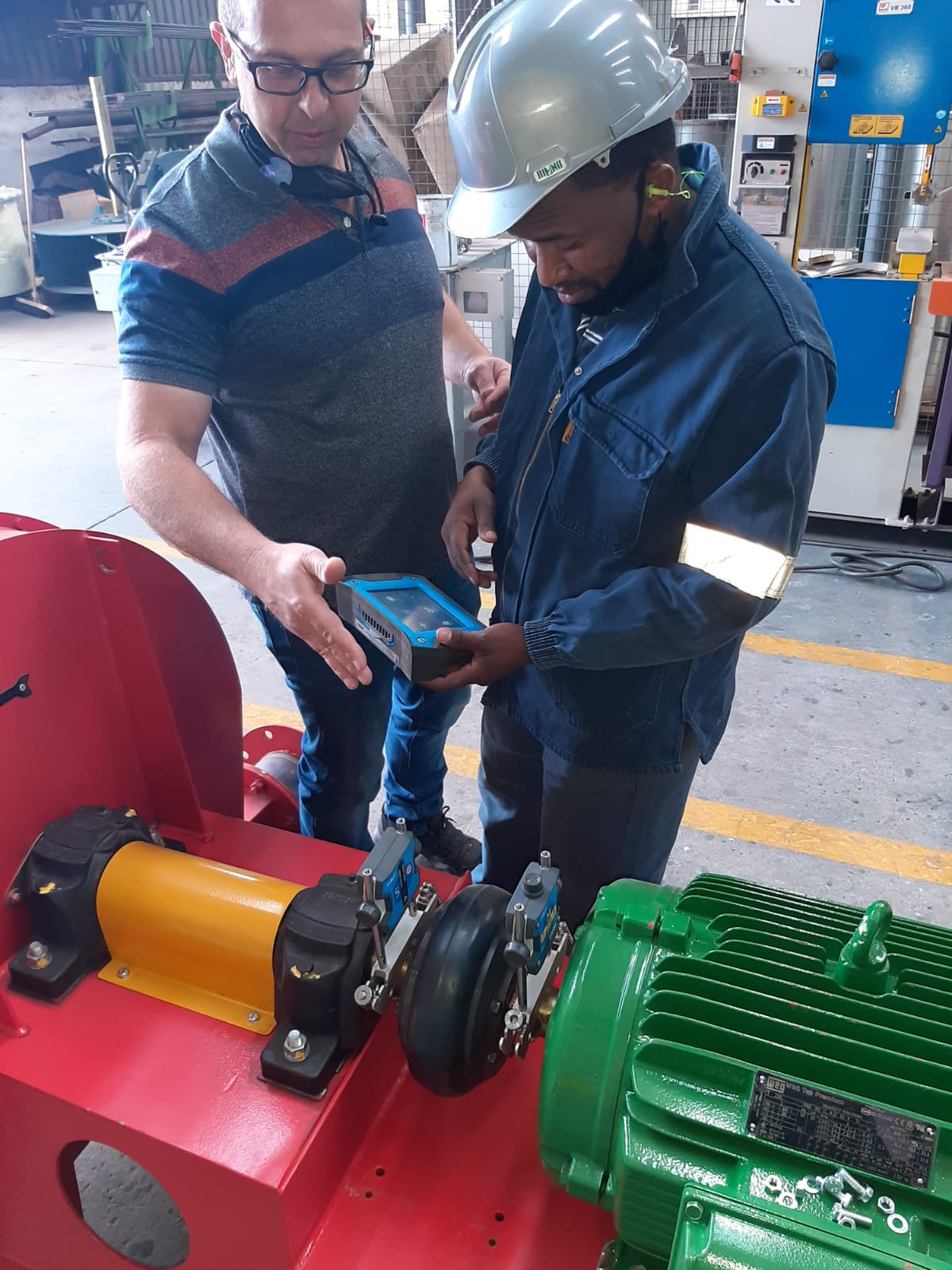
The Equipment must be off line for this procedure. A laser transmitter and receiver are placed on the opposing shafts. As the shafts are rotated, the computer computes the offset and correction required. In addition, soft foot testing is easily accomplished.
Another great benefit of this technology is “after the shafts are aligned, the results can be saved and later printed out or placed in a report to present to management.